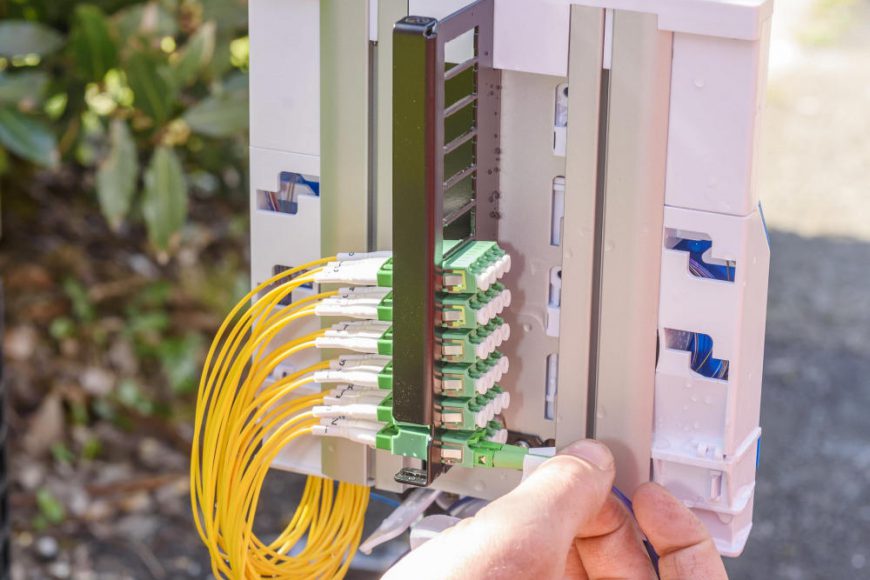
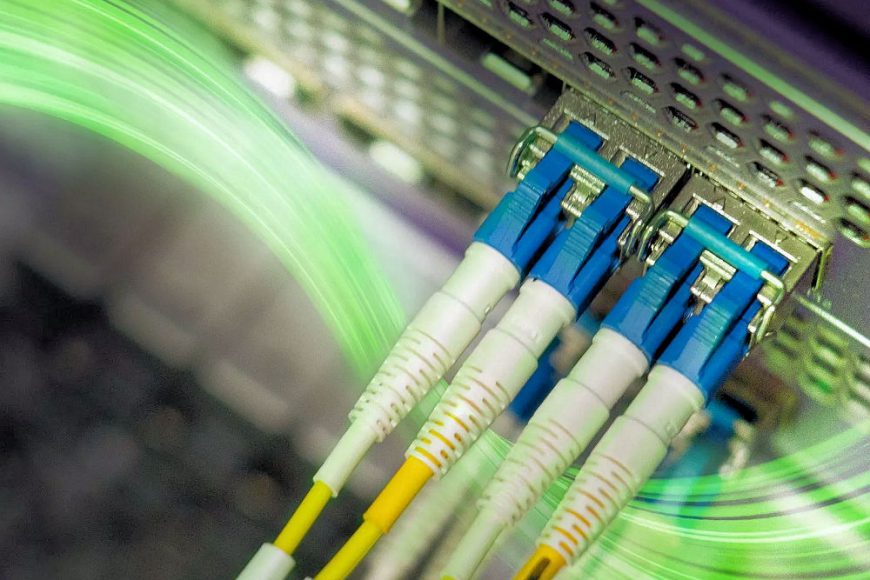
Avoiding Costly Mistakes When Specifying Fibre Infrastructure

Whether you’re upgrading an existing network, connecting new premises or planning a data centre expansion, specifying the right fibre infrastructure is one of the most important decisions you’ll make.  While the focus often falls on the active networking equipment, the underlying fibre infrastructure provides the foundation on which performance, scalability and reliability depend.

Getting the specification right from the outset can save significant time, cost and disruption later in the project.  Here are five common mistakes organisations can avoid when planning their next fibre deployment.

1. Designing for today’s requirements rather than tomorrow’s

Network demands continue to grow as organisations adopt cloud services, AI-driven applications, hybrid working and increasingly data-intensive workloads.  Infrastructure designed purely around today’s bandwidth requirements can quickly become a limitation.

Selecting appropriate fibre types, allowing capacity for future expansion and considering higher-speed optical technologies at the planning stage can help extend the life of a network and reduce the need for costly upgrades later.

2. Assuming all fibre is the same

Different applications require different fibre solutions.  Singlemode and multimode fibre each have distinct strengths, while connector types, cable construction and installation environments all influence the overall design.

Factors such as transmission distance, environmental conditions, available pathways and future growth should all be considered before selecting a cable specification. Choosing the most suitable solution from the outset helps avoid unnecessary complexity and expense.

3. Overlooking compatibility

Modern networks frequently combine equipment from multiple manufacturers. While standards have improved interoperability, compatibility between optical transceivers, switches, routers and fibre infrastructure should never be taken for granted.

Verifying interface types, optical budgets, connector standards and supported transmission distances during the design phase helps minimise unexpected issues during installation and commissioning.

4. Underestimating the importance of testing

Testing is often viewed as the final step of a project, but it is fundamental to ensuring long-term network performance.

Insertion loss testing, continuity checks and, where appropriate, OTDR testing provide confidence that the installed infrastructure performs as intended.  Accurate test records also become invaluable when fault finding or planning future upgrades.

A properly documented network is generally easier to maintain throughout its operational life.

5. Focusing solely on purchase price

The lowest-cost component is not always the lowest-cost solution.

Reliability, lead times, product availability, manufacturer support and long-term maintainability all contribute to the total cost of ownership.  Selecting proven technologies that align with project objectives often delivers greater value over the lifetime of the installation.

Planning for long-term success

Every fibre infrastructure project presents its own technical and operational challenges.  Taking time to consider future requirements, compatibility, testing and long-term support can help organisations build networks that remain reliable and scalable for many years.

At FTL, we work with customers across enterprise, service provider and critical infrastructure environments to help identify solutions that meet both current requirements and future ambitions.  By combining practical experience with technologies from leading manufacturers, we help organisations make informed decisions that support successful network deployments.

The Hidden Challenges of Fibre Infrastructure Projects: Why the Details Matter

Fibre optic networks are often seen as a straightforward solution for delivering fast, reliable connectivity. However, behind every successful fibre deployment is a series of important decisions that influence performance, reliability and long-term value.

While the finished installation may appear simple, achieving a dependable network requires careful planning, the right components and an understanding of how each part of the solution works together.

Fibre infrastructure is more than just a cable

A common misconception is that selecting the correct fibre cable is the main consideration when planning a network.

In reality, the complete fibre infrastructure consists of multiple interconnected elements, including:

  • Fibre type and performance characteristics
  • Connectors and termination methods
  • Patch panels and distribution systems
  • Optical transceivers
  • Active networking equipment
  • Testing and certification processes

Each element contributes to the overall performance of the network.  A decision made at one stage of the design can impact reliability, future scalability and maintenance requirements.

Planning for today and tomorrow

One of the biggest challenges when designing fibre infrastructure is balancing current requirements with future growth.

A network designed only around today’s needs can quickly become a limitation as organisations introduce new applications, increase data volumes or expand their operations.

Factors that should be considered include:

  • Expected bandwidth growth
  • Future equipment upgrades
  • Additional connections
  • Resilience requirements
  • Physical space and accessibility

A well-planned fibre installation provides flexibility, allowing organisations to adapt without requiring major infrastructure changes.

The importance of compatibility

Modern networks often combine equipment from multiple manufacturers and technology providers.

Ensuring compatibility between fibre infrastructure, optics and network equipment is essential.

Considerations include:

  • Fibre specification
  • Connector type and polarity
  • Transmission distance
  • Optical power requirements
  • Network standards

Small mismatches can lead to reduced performance or unexpected issues during installation.

Testing and documentation: protecting the investment

A fibre network is only as reliable as the process used to verify it.

Professional testing confirms that installed infrastructure meets the required performance standards and helps identify potential issues before they affect operations.

Testing and documentation also provide long-term benefits, including:

  • Easier fault finding
  • Faster maintenance
  • Improved asset management
  • Confidence during future upgrades

The value of experience

Successful fibre infrastructure projects rely on more than selecting products from a specification sheet.

Experience plays an important role in understanding the practical challenges of deployment, from choosing suitable components through to ensuring everything works together as a complete solution.

Working with experienced specialists helps organisations reduce risk, avoid unnecessary costs and create networks that remain dependable throughout their operational life.

Building networks ready for the future

As connectivity requirements continue to increase, fibre infrastructure will remain a critical foundation for modern communications.

The organisations that achieve the best long-term results are those that look beyond the immediate requirement and consider how their network will need to perform in the years ahead.

With expertise across fibre infrastructure, optical technologies and connectivity solutions, FTL supports customers in delivering reliable networks designed around their specific requirements.

Fibre Technologies Ltd is your trusted partner for your fibre infrastructure. Our team of experts is ready to help you select the right products and provide the support you need to secure your power systems.

Get in Touch with Us Today!

Why Open Optical Networking Is Changing the Way Organisations Build Networks

As digital transformation continues to accelerate, organisations are placing greater demands on their communications infrastructure.  Increasing bandwidth requirements, cloud connectivity, AI applications and data centre growth are driving the need for networks that are not only faster, but also more flexible and easier to evolve.

This is one of the reasons why open optical networking is attracting increasing attention across enterprise, carrier and data centre environments.

Moving beyond proprietary networks

Historically, many optical networks were built around a single manufacturer’s ecosystem.  While this simplified procurement and support, it could also limit flexibility when expanding or upgrading infrastructure.

Open optical networking promotes greater interoperability between equipment, enabling organisations to select solutions that best meet their technical and commercial requirements rather than being restricted to a single vendor.

Protecting long-term investment

Network infrastructure is typically expected to remain in service for many years.  During that time, technologies evolve, bandwidth requirements increase and operational priorities change.

An open approach allows organisations to introduce new technologies as requirements develop while making better use of existing infrastructure.  This flexibility can help extend the operational life of network investments and reduce unnecessary replacement costs.

Supporting higher-capacity networks

The rapid growth of cloud computing, artificial intelligence and increasingly distributed applications is creating unprecedented demand for high-capacity optical networks.

Modern optical technologies support everything from campus connectivity and metropolitan networks through to long-distance data centre interconnects, providing the scalability required to accommodate future growth.

As organisations plan for 100G, 400G and beyond, open networking architectures can simplify expansion while maintaining operational flexibility.

Encouraging innovation

An open ecosystem allows organisations to benefit from advances across the wider optical networking market rather than relying on a single product roadmap.

This encourages innovation, promotes healthy competition and gives network designers greater freedom when selecting the technologies most appropriate for a particular application.

The importance of informed design

Although open optical networking offers significant advantages, successful implementation still depends on careful planning.

Factors such as interoperability, optical performance, network management, resilience and future scalability should all be considered during the design process to ensure the chosen solution meets operational requirements.

Working with experienced technology partners can help organisations navigate these considerations while developing a network architecture that supports both current and future demands.

Building networks for the future

As organisations continue to modernise their infrastructure, flexibility is becoming just as important as capacity.

Open optical networking provides a framework for building scalable, adaptable networks that can evolve alongside changing business requirements without unnecessary compromise.

By understanding both the available technologies and the practical considerations involved in deploying them, organisations are better placed to create resilient optical networks capable of supporting the next generation of digital services.

Modernising SCADA for the Water Industry with the Loop Telecom AM3440

As UK water utilities face increasing pressure to improve environmental performance and reduce pollution incidents, modern, resilient communications infrastructure has never been more important. The Loop Telecom AM3440 provides a proven platform for modernising legacy SCADA networks while protecting existing investments in critical operational technology.

Many water companies continue to rely on established SCADA systems for monitoring pumping stations, treatment works and remote assets. The AM3440 enables these networks to evolve by seamlessly supporting both traditional TDM services and modern IP communications, allowing operators to introduce new monitoring capabilities without the disruption and cost of a complete infrastructure replacement. The platform supports Ethernet, serial interfaces, remote management and resilient fibre connectivity, making it well suited to the gradual migration of utility communications networks.

By improving connectivity between remote telemetry units (RTUs), sensors and control centres, utilities can collect more real-time operational data from across their networks. This enhanced visibility allows operators to identify abnormal conditions—such as rising sewer levels, equipment failures or changes in water quality—more quickly, enabling earlier intervention before incidents escalate into pollution events.

For UK water companies working to reduce sewage discharges and protect rivers and waterways, a modern communications backbone is an essential part of a smarter monitoring strategy. The AM3440’s high reliability, remote management capabilities and flexible interface options make it an ideal solution for supporting the next generation of SCADA systems while extending the life of existing assets.

As the UK partner of Loop Telecom, Fibre Technologies works with some of the UK’s most critical infrastructure operators to deliver resilient real time communications solutions that bridge legacy and next-generation networks.

By combining robust transport technology with modern SCADA connectivity, organisations can improve operational resilience, enhance environmental monitoring and help safeguard the UK’s rivers for future generations.

To find out more please contact Fibre Technologies Ltd

Tel: 01344 752222 Email: sales@fibre.co.uk

The Hidden Challenges of Fibre Infrastructure Projects: Why the Details Matter

Fibre optic networks are often seen as a straightforward solution for delivering fast, reliable connectivity. However, behind every successful fibre deployment is a series of important decisions that influence performance, reliability and long-term value.

While the finished installation may appear simple, achieving a dependable network requires careful planning, the right components and an understanding of how each part of the solution works together.

Fibre infrastructure is more than just a cable

A common misconception is that selecting the correct fibre cable is the main consideration when planning a network.

In reality, the complete fibre infrastructure consists of multiple interconnected elements, including:

  • Fibre type and performance characteristics
  • Connectors and termination methods
  • Patch panels and distribution systems
  • Optical transceivers
  • Active networking equipment
  • Testing and certification processes

Each element contributes to the overall performance of the network.  A decision made at one stage of the design can impact reliability, future scalability and maintenance requirements.

Planning for today and tomorrow

One of the biggest challenges when designing fibre infrastructure is balancing current requirements with future growth.

A network designed only around today’s needs can quickly become a limitation as organisations introduce new applications, increase data volumes or expand their operations.

Factors that should be considered include:

  • Expected bandwidth growth
  • Future equipment upgrades
  • Additional connections
  • Resilience requirements
  • Physical space and accessibility

A well-planned fibre installation provides flexibility, allowing organisations to adapt without requiring major infrastructure changes.

The importance of compatibility

Modern networks often combine equipment from multiple manufacturers and technology providers.

Ensuring compatibility between fibre infrastructure, optics and network equipment is essential.

Considerations include:

  • Fibre specification
  • Connector type and polarity
  • Transmission distance
  • Optical power requirements
  • Network standards

Small mismatches can lead to reduced performance or unexpected issues during installation.

Testing and documentation: protecting the investment

A fibre network is only as reliable as the process used to verify it.

Professional testing confirms that installed infrastructure meets the required performance standards and helps identify potential issues before they affect operations.

Testing and documentation also provide long-term benefits, including:

  • Easier fault finding
  • Faster maintenance
  • Improved asset management
  • Confidence during future upgrades

The value of experience

Successful fibre infrastructure projects rely on more than selecting products from a specification sheet.

Experience plays an important role in understanding the practical challenges of deployment, from choosing suitable components through to ensuring everything works together as a complete solution.

Working with experienced specialists helps organisations reduce risk, avoid unnecessary costs and create networks that remain dependable throughout their operational life.

Building networks ready for the future

As connectivity requirements continue to increase, fibre infrastructure will remain a critical foundation for modern communications.

The organisations that achieve the best long-term results are those that look beyond the immediate requirement and consider how their network will need to perform in the years ahead.

With expertise across fibre infrastructure, optical technologies and connectivity solutions, FTL supports customers in delivering reliable networks designed around their specific requirements.

Fibre Technologies Ltd is your trusted partner for your fibre infrastructure. Our team of experts is ready to help you select the right products and provide the support you need to secure your power systems.

Get in Touch with Us Today!

Blog Categories

Archives

Instagram

[instagram-feed num=6 cols=3 imagepadding=2.5]
Looking for Fibre Distribution? →