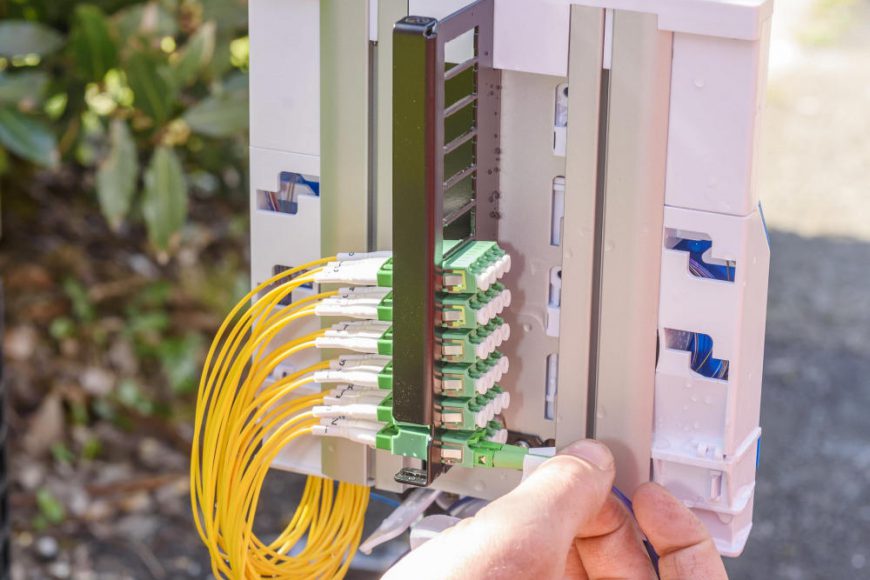
Beyond QoS: Choosing the Right Path to More Network Capacity (2 of 2)

In Part One, we looked at how AI may change network demand.  The impact is not always a simple increase in bandwidth.  AI can alter where traffic flows, how long transfers last and how the network behaves during periods of peak demand.

We also considered the limits of Quality of Service, prioritisation and logical separation.  These techniques can make better use of available capacity, but they cannot create more of it.

Once the constraint has been identified, the next question is what to do about it.

Optimise what is already there

The most sensible starting point is often the existing network.

QoS can protect delay-sensitive services.  Traffic shaping can control how bandwidth is shared.  Routing changes may prevent traffic from taking an inefficient path.  Logical separation can also reduce interference between applications, departments or customers.

The main strength of this approach is that it may improve performance without major infrastructure investment.  Changes can be introduced gradually, monitored and adjusted as traffic patterns develop.

However, optimisation has limits.

QoS changes which traffic receives preferential treatment.  Traffic shaping controls demand by delaying or restricting some flows.  Logical separation improves control and visibility, but does not increase the physical capacity underneath.

These techniques work best where the issue is contention, poor configuration or uneven use of resources.  They are less effective where links regularly operate near capacity, or where most traffic is considered business-critical.

At that point, optimisation may improve how congestion is experienced without removing it.

Target the real bottleneck

Where the constraint is clearly understood, a targeted upgrade can be highly effective.

This could mean replacing a low-capacity uplink, increasing an interface speed, upgrading a switch or adding a higher-capacity circuit between two locations.

The advantage is precision.  Investment is directed at the part of the network causing the problem.  This can be faster, less disruptive and more economical than a wider redesign.

The risk is that the bottleneck simply moves.

A faster access link may expose a slower aggregation layer.  A higher-capacity data-centre connection may reveal limitations within switching or storage.  Increasing WAN capacity may move congestion closer to the application.

For that reason, targeted upgrades should be assessed across the complete end-to-end path.

Add circuits or fibre

Sometimes the simplest answer is to add physical capacity.

A second circuit may increase bandwidth, improve resilience or allow traffic to be divided between services.  Additional fibre can provide a clean route for expansion and greater design freedom.

The strength of this approach is simplicity.  Separate physical paths can be easier to understand and troubleshoot than a complex shared architecture.

Availability is often the deciding factor.  Spare fibre may not exist.  Installing more can be costly, disruptive or impractical.  Additional leased circuits also introduce recurring costs, lead times and new contractual commitments.

A second link does not automatically provide resilience either.  The services must follow genuinely diverse routes and avoid shared ducts, entry points, equipment and power sources.  Otherwise, apparent diversity may still contain a common point of failure.

Increase capacity over existing fibre

Where fibre is available, but fibre count is limited, wavelength-based technologies may offer a more scalable answer.

CWDM and DWDM allow multiple services or wavelengths to be carried over the same fibre pair.  This can increase capacity without the cost and disruption of installing new fibre.

CWDM can provide a relatively simple and cost-effective way to add several channels over suitable distances.  It is often well suited to straightforward point-to-point requirements where capacity needs are moderate and future growth is reasonably predictable.

DWDM supports many more channels and higher capacities over longer distances.  It may also provide a stronger platform for expansion, protection and service management.

The strength of both approaches is fibre efficiency.  The limitation is that the design becomes more dependent on optical engineering.

Distance, fibre loss, connector performance, passive losses and optical power budgets all need to be considered.  Longer-distance or higher-capacity systems may also require amplification, active monitoring or more advanced protection.

The choice should therefore follow the application.  CWDM and DWDM are not simply ways to add more bandwidth.  They are tools for creating a practical capacity and growth path over limited fibre resources.

Make the passive network work harder

Passive Optical Networks provide another example of how more value can be extracted from the same fibre infrastructure.

In a PON, multiple users or services share a common feeder fibre and passive splitter network.  Dynamic Bandwidth Allocation can distribute upstream capacity according to demand, but it is still managing a finite resource.

A more strategic opportunity comes from wavelength coexistence.

GPON and XGS-PON can operate over the same Optical Distribution Network using different wavelength bands.  Existing GPON services can remain in place, while selected higher-demand customers move onto XGS-PON.

This allows migration to follow demand.  The fibre, splitters and customer distribution infrastructure remain in service, while the active OLT and ONT equipment changes.

It can also create separate capacity domains over the same physical network.  A customer moved from GPON to XGS-PON no longer consumes capacity from the original GPON system.  The outside plant is shared, but the transmission capacity is not one common pool.

Looking further ahead, 50G-PON extends the same principle.  GPON, XGS-PON and 50G-PON can coexist over a suitably designed common fibre and splitter infrastructure, subject to the wavelength plan, equipment compatibility and available optical-loss budget.

50G-PON has not yet reached the wider adoption of GPON or XGS-PON.  Its early use is likely to remain selective, particularly for high-capacity business services, mobile transport and other demanding applications.

Its wider significance is architectural.  A passive network installed today may support several generations of active technology without repeatedly rebuilding the outside plant.

That opportunity depends on decisions made at the design stage.  Coexistence components introduce additional loss.  Split ratios, distance, connector condition and available optical margin can all affect whether future overlays remain practical.

The ODN should therefore be viewed as a long-life infrastructure platform, rather than something tied to one generation of PON electronics.

Avoid solving only today’s problem

One of the most common risks is designing around the immediate requirement alone.

A low-cost point-to-point solution may meet today’s need.  However, if it has no practical upgrade path, it may need to be replaced when the next service, site or capacity step is added.

At the other extreme, it is possible to over-engineer.  A large modular platform may offer impressive capability, but much of it may never be used.

The aim is not to choose the biggest solution or the cheapest one.  It is to choose an architecture with a proportionate growth path.

That means considering the next interface speed, the next wavelength, the next PON generation and the next resilience requirement.

There is no universal point at which QoS should give way to more capacity.  Nor is there one optical solution that suits every organisation.

Where traffic is bursty and priorities are clear, optimisation may be enough.  Where one component is constrained, a targeted upgrade may provide the best return.  Where fibre is plentiful, physical expansion may be simplest.  Where fibre is limited and demand is growing, CWDM, DWDM or a multi-generation PON strategy may provide the more scalable route.

AI may be the reason organisations are asking the question today.  The underlying challenge is broader.

How can the network meet the current requirement without limiting the organisation’s next step?

Discuss your network requirements

To discuss your current network requirements, capacity challenges or future expansion plans in more detail, contact the FTL technical sales team.

Telephone: +44 (0) 1344 752 222

Email: sales@fibre.co.uk

AI, Bandwidth and the Limits of Network Prioritisation (1 of 2)

Every major shift in business communications places new demands on the network.  In this two-part series, we first look at how AI may change traffic patterns, expose hidden bottlenecks and test the limits of established techniques such as Quality of Service and prioritisation.  In Part Two, we examine the main response options in more detail, from targeted upgrades and additional fibre through to CWDM, DWDM and multi-generation PON architectures.

VoIP introduced concerns around delay, jitter and call quality.  Video conferencing increased bandwidth consumption.  Cloud services changed where applications and data were hosted, and how users accessed them.

AI is now prompting a similar discussion.

Can existing networks cope with the additional demand, or will organisations need to invest in more capacity?

The answer will not be the same for everyone.  Nor should the first response always be a major network upgrade.  In many cases, the starting point is to make better use of the capacity already available.

However, AI may also require organisations to look beyond headline bandwidth figures.  The volume of traffic matters, but so do its direction, duration and behaviour.

How networks have traditionally adapted

When new applications become widely used, they begin competing with existing traffic.

Some services are more sensitive than others.  Voice uses relatively little bandwidth, but is highly sensitive to delay, packet loss and jitter.  Video needs more capacity and consistent performance.  A large file transfer may consume significant bandwidth but can usually tolerate taking longer to transit the network.

This is where Quality of Service, or QoS, can help.

QoS can protect delay-sensitive traffic.  Prioritisation can favour critical applications.  Traffic shaping can control how bandwidth is consumed during busy periods. VLANs, VRFs and other forms of logical separation can also isolate services or user groups.

These are valuable techniques.  They help organisations use their networks more efficiently and maintain service quality as demand increases.

However, they have an important limitation.  They manage the capacity that already exists.  They do not create more of it.

Average utilisation can hide the problem

Network capacity is often assessed using average utilisation.  This is useful, but it may not tell the whole story.

A link may average only 40 or 50 per cent utilisation across the day yet still experience short periods of congestion.  These peaks can cause packets to queue, increase latency and affect application performance.

The issue can be particularly difficult to identify when traffic is bursty.  A large volume of data may arrive over a short period rather than being spread evenly throughout the day.

Monitoring intervals can hide this.  A five-minute average may smooth out a congestion event lasting only a few seconds.  Those few seconds may still be enough to affect a voice call, disrupt a video session or slow a time-sensitive application.

Capacity planning should therefore consider peak utilisation, queue behaviour and latency under load, rather than relying on a single average figure.

How AI may change the traffic profile

AI will not affect every organisation in the same way.

Employees accessing a cloud-hosted AI assistant may generate very little additional traffic.  That type of adoption is unlikely to transform an organisation’s optical networking requirements.

The picture can be very different when AI relies on large datasets, distributed storage or specialist computing resources.

Data may need to move between servers, storage platforms, cloud environments and data centres.  These transfers can be large, frequent and sustained.  A small number of high-volume transfers, sometimes described as “Elephant flows”, may consume a significant share of the available capacity.

Traditional enterprise networks have often been designed around north-south traffic.  This is data moving between users and applications, or between the organisation and the internet.

Modern data-centre and AI environments can generate much more east-west traffic.  This is traffic moving between servers, storage systems and processing environments.

That distinction matters.  A network designed mainly around user access may not be optimised for large volumes of data moving between infrastructure platforms.

AI may therefore change more than the amount of traffic.  It may change where traffic flows, how long transfers last and where capacity is needed.

Look beyond the obvious link

A bottleneck is not always found on the most visible connection.

An external circuit may have adequate capacity, while congestion exists within the switching infrastructure behind it.  The issue may be an oversubscribed uplink, an inefficient path or several access links feeding into a lower-capacity aggregation point.

Oversubscription is not inherently poor design.  Most users and systems do not transmit at full capacity at the same time.  It becomes a problem when traffic patterns change and simultaneous demand exceeds the assumptions made when the network was designed.

This is why increasing the capacity of one connection may not solve the problem.  Capacity needs to be considered across the complete path.

What are the options?

Once the real constraint has been identified, there are several possible responses.

The first is to optimise the existing network.  QoS, traffic shaping, routing changes and logical separation may improve performance without major investment.  This is cost-effective where the issue is contention or poor traffic management, but less effective where capacity is genuinely exhausted.

The second option is a targeted upgrade.  Increasing the speed of a constrained interface or replacing an oversubscribed uplink may remove a specific bottleneck.  The risk is that the bottleneck simply moves elsewhere.

A third approach is to add more capacity through higher-speed circuits or additional fibre.  This can be straightforward where infrastructure is available, but costly or impractical across longer distances.

The final option is a more scalable optical platform.  CWDM and DWDM can increase capacity over existing fibre and provide a clearer route for future growth.  PON architectures may also allow several generations of active technology to share the same passive fibre infrastructure.

No single option is automatically right.  The correct response depends on traffic behaviour, fibre availability, distance, resilience and expected growth.

AI is encouraging organisations to review the infrastructure supporting their applications and data.  That is worthwhile.  However, decisions should be based on evidence rather than headlines.

In Part Two, we look more closely at the strengths, limitations and trade-offs of the available options.

Discuss your network requirements

To discuss your current network requirements, capacity challenges or future expansion plans in more detail, contact the FTL technical sales team.

Telephone: 01344 752222

Email: sales@fibre.co.uk

Adtran Logo Blue 72dpi

BMC TV expands UK network for major sports broadcasts with Adtran and Fibre Technologies Ltd

BMC TV’s upgraded UK core network carries live broadcast feeds across its LMX Live infrastructure, supporting major events including FIFA World Cup coverage and racecourse broadcasting. The design provides reliable, low-latency distribution across multiple locations, while allowing capacity to be reconfigured quickly between events and venues.

The upgrade uses Adtran’s FSP 150 packet edge technology, supporting 100Gbit/s Ethernet today with a route to 400Gbit/s as capacity requirements grow. Adtran’s Mosaic Network Controller and Packet Director also simplify service management and rapid changes.

Fibre Technologies led the solution design, commercial engagement and implementation support, helping BMC TV turn changing, event-driven broadcast requirements into a practical, scalable network.

“We worked closely with BMC TV to translate event-driven requirements into a practical, scalable network design, ensuring the solution could be deployed quickly and evolve toward higher-capacity services as demand grows.”

Mark Jackson, Account Manager, Fibre Technologies Ltd

Read the full announcement on Business Wire, or find out more about Adtran solutions from Fibre Technologies.

Wildanet Engineers Hand Connecting FTTP Lines

Avoiding Costly Mistakes When Specifying Fibre Infrastructure

Whether you’re upgrading an existing network, connecting new premises or planning a data centre expansion, specifying the right fibre infrastructure is one of the most important decisions you’ll make.  While the focus often falls on the active networking equipment, the underlying fibre infrastructure provides the foundation on which performance, scalability and reliability depend.

Getting the specification right from the outset can save significant time, cost and disruption later in the project.  Here are five common mistakes organisations can avoid when planning their next fibre deployment.

1. Designing for today’s requirements rather than tomorrow’s

Network demands continue to grow as organisations adopt cloud services, AI-driven applications, hybrid working and increasingly data-intensive workloads.  Infrastructure designed purely around today’s bandwidth requirements can quickly become a limitation.

Selecting appropriate fibre types, allowing capacity for future expansion and considering higher-speed optical technologies at the planning stage can help extend the life of a network and reduce the need for costly upgrades later.

2. Assuming all fibre is the same

Different applications require different fibre solutions.  Singlemode and multimode fibre each have distinct strengths, while connector types, cable construction and installation environments all influence the overall design.

Factors such as transmission distance, environmental conditions, available pathways and future growth should all be considered before selecting a cable specification. Choosing the most suitable solution from the outset helps avoid unnecessary complexity and expense.

3. Overlooking compatibility

Modern networks frequently combine equipment from multiple manufacturers. While standards have improved interoperability, compatibility between optical transceivers, switches, routers and fibre infrastructure should never be taken for granted.

Verifying interface types, optical budgets, connector standards and supported transmission distances during the design phase helps minimise unexpected issues during installation and commissioning.

4. Underestimating the importance of testing

Testing is often viewed as the final step of a project, but it is fundamental to ensuring long-term network performance.

Insertion loss testing, continuity checks and, where appropriate, OTDR testing provide confidence that the installed infrastructure performs as intended.  Accurate test records also become invaluable when fault finding or planning future upgrades.

A properly documented network is generally easier to maintain throughout its operational life.

5. Focusing solely on purchase price

The lowest-cost component is not always the lowest-cost solution.

Reliability, lead times, product availability, manufacturer support and long-term maintainability all contribute to the total cost of ownership.  Selecting proven technologies that align with project objectives often delivers greater value over the lifetime of the installation.

Planning for long-term success

Every fibre infrastructure project presents its own technical and operational challenges.  Taking time to consider future requirements, compatibility, testing and long-term support can help organisations build networks that remain reliable and scalable for many years.

At FTL, we work with customers across enterprise, service provider and critical infrastructure environments to help identify solutions that meet both current requirements and future ambitions.  By combining practical experience with technologies from leading manufacturers, we help organisations make informed decisions that support successful network deployments.

Blog Categories

Archives

Instagram

[instagram-feed num=6 cols=3 imagepadding=2.5]
Looking for Fibre Distribution? →