
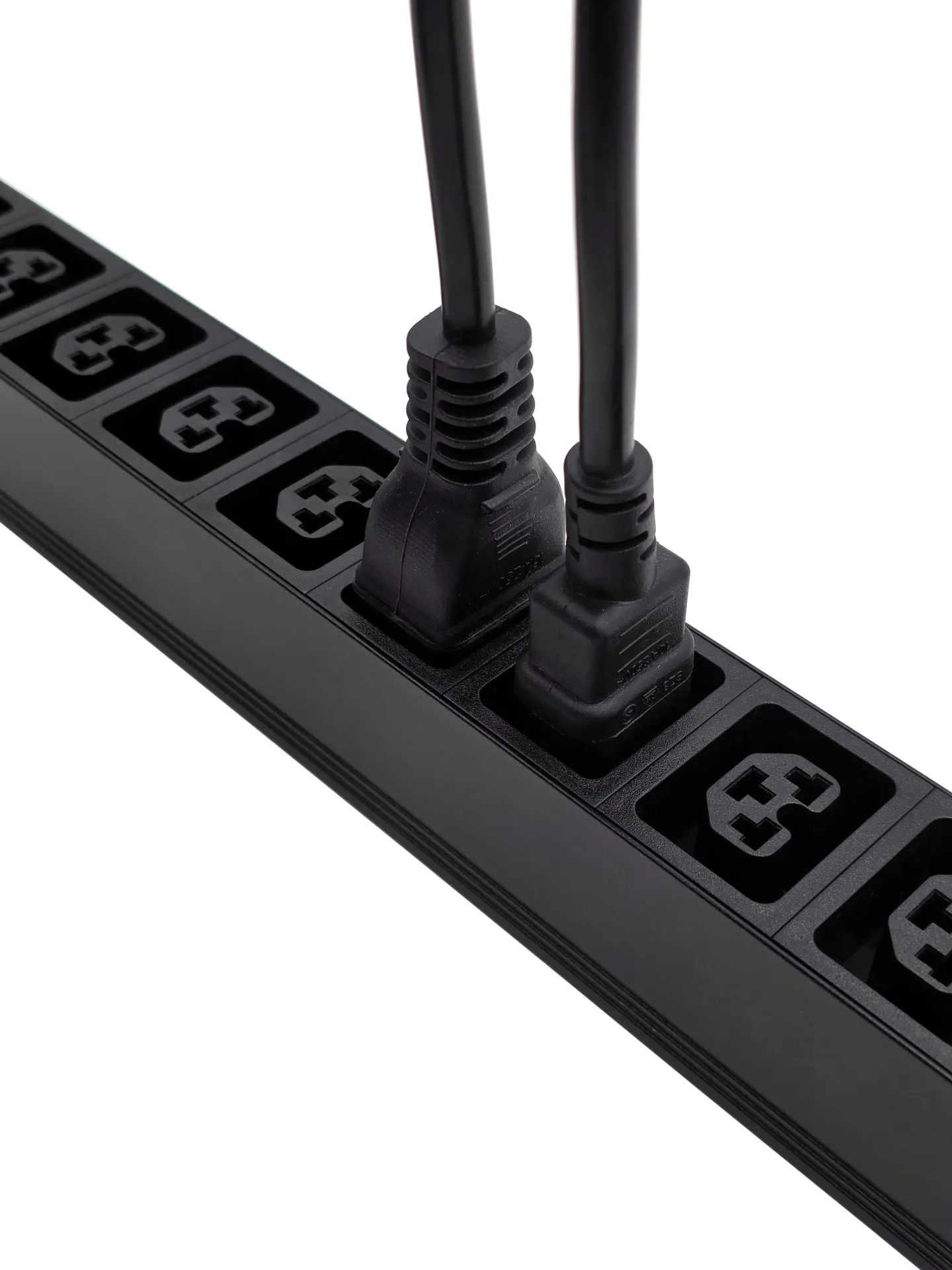
The rapid growth of AI, cloud computing and high-density IT infrastructure is placing increasing demands on data centre power distribution. As racks become more dynamic, operators need flexible, reliable power solutions that can adapt to changing equipment requirements.
One innovation helping address this challenge is the C39 Hybrid Power Connector, which combines compatibility with two common IEC power plug types into a single outlet.
Why Traditional Power Distribution Creates Challenges
For many years, rack power distribution units (PDUs) have been designed around separate IEC C13 and IEC C19 outlets. While effective, this approach requires careful planning to ensure the right quantity of each outlet type is available for connected equipment.
This can become problematic as infrastructure evolves. A rack designed for servers fitted with IEC C14 plugs today may later need to accommodate higher-powered network switches, storage devices or GPU-based computing equipment using IEC C20 plugs.
If the existing power distribution configuration cannot support these changes, operators may need to replace PDUs or install additional units.
In modern data centres, where flexibility and scalability are essential, these limitations can introduce unnecessary complexity and cost.
Introducing the C39 Hybrid Connector
The C39 Hybrid Power Connector addresses these challenges by combining the functionality of IEC C13 and IEC C19 outlets into a single socket, capable of accepting both IEC C14 and IEC C20 equipment plugs.
Rather than deciding in advance how many C13 and C19 outlets will be required, operators can deploy hybrid outlets that accommodate both connector types.
This provides greater flexibility within the rack, allowing equipment configurations to change without being restricted by the original mix of outlet types.
The result is a simpler, more adaptable approach to power distribution that can evolve alongside changing infrastructure requirements.
Explore our IEC C39 Hybrid PDU range for available rack-mounted configurations.
Benefits for Data Centre Operators
Improved Rack Flexibility
The hybrid nature of C39 outlets allows servers, storage systems, networking equipment and other compatible IT hardware to be connected using either C14 or C20 plugs.
This makes capacity planning easier and reduces the risk of having unused outlets simply because they are the wrong connector type.
Simplified Infrastructure Design
Using hybrid outlets reduces the complexity of specifying and installing PDUs. Engineers can accommodate multiple equipment plug types without needing to determine the exact proportion of C13 and C19 connections in advance.
Future-Proofed Deployments
IT environments rarely remain static. As workloads grow and equipment is refreshed, power connection requirements can change.
C39 connectors help accommodate these changes, potentially reducing the need to replace existing power distribution hardware when equipment is upgraded.
Improved Outlet Utilisation
In high-density environments, making efficient use of available rack connections is important.
By supporting both C14 and C20 plugs, C39 outlets provide greater flexibility in how available power connections are allocated, helping reduce unused outlets and improving overall PDU utilisation.
Enhanced Protection with Dual-Branch Circuit Designs
Alongside connector flexibility, circuit protection is another important consideration when selecting a PDU.
Some power distribution designs incorporate dual-branch circuit protection, with outlets divided between two separately protected circuits.
Configurations using 16A hydraulic-magnetic (Hydromag) circuit breakers can offer several advantages:
- Improved distribution of electrical loads across circuits
- Protection against overload conditions
- Reduced sensitivity to ambient temperature compared with thermal circuit breakers
- Greater flexibility when managing circuit loads
Hydraulic-magnetic circuit breakers are particularly suited to environments where ambient temperatures can vary, as their operating characteristics are less affected by temperature changes.
The exact circuit arrangement, breaker type and available protection depend on the individual PDU model and should be confirmed against its specifications.
Supporting the Next Generation of IT Infrastructure
As organisations continue to invest in AI platforms, edge computing, cloud services and data-intensive applications, the demands placed on rack power infrastructure will continue to evolve.
Power distribution solutions must provide flexibility while maintaining the reliability expected in critical IT environments.
The C39 Hybrid Power Connector offers a practical improvement, simplifying power distribution planning and increasing compatibility with different equipment types.
When combined with appropriate circuit protection and PDU design, hybrid outlets provide a flexible foundation for supporting current and future IT equipment.
Explore Our IEC C39 Hybrid PDU Range
Our C39 Hybrid PDU range includes horizontal and vertical configurations to suit different rack installations.
Horizontal 1U PDUs
- Horizontal 1U C39 PDU with Covered Switch and 3 Metre Flex
- Horizontal 1U C39 PDU with Neon Power Indicator and 32A Commando Input
Vertical PDUs
- Vertical C39 PDU with Covered Switch and 3 Metre Flex
- Vertical 0U C39 PDU with Neon Power Indicator and 32A Commando Input
View the full IEC C39 Hybrid PDU range to explore the available options.
Conclusion
Power distribution may not receive the same attention as servers, storage or networking equipment, but it remains a fundamental component of data centre reliability.
By reducing the limitations associated with fixed C13 and C19 outlet configurations, the C39 Hybrid Power Connector offers a more flexible approach to rack power distribution.
For operators looking to build adaptable and efficient infrastructure, hybrid power distribution provides a practical way to accommodate changing equipment requirements while making better use of available PDU connections.